Monday, November 15, 2010

World National Food / Dish

I was going through the recipes on internet and went through few and got an idea for World National Food / Dish. Like the concept and would like to share with you.
If you are fine to have a look at the food , even if it is non vegetarian, you can have a look Here.

Else you can have a look at Wiki, I am providing the link for the wiki National_dish

Soon will try to make vegetarian from those :)


Saturday, November 13, 2010

Books I am going through for new Ideas

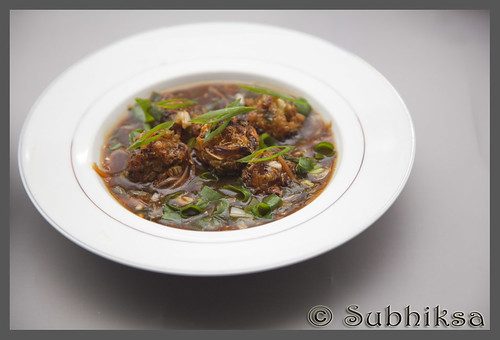
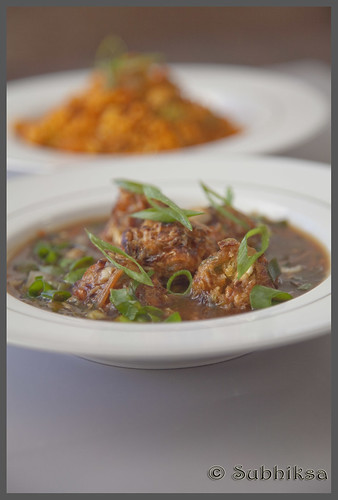
Vegetable Manchurian


After the Diwali celebrations and having those loads of sugar we decided to make something spicy and Basically Chinese.
So here goes Indian - Chinese Vegetable Manchurian.


Ingredients:


Manchurian 
  • 1 cup cabbage, finely chopped
  • 1/2 onion finely chopped
  • 1 tbsp ginger garlic paste
  • 2 carrots grated
  • 1 capsicum chopped
  • 1-2 strings of spring onion
  • 1 green chili finely chopped
  • salt to taste
  • 3-4 tbsp plain flour 
  • 2 tbsp corn flour
  • Oil for deep frying
Gravy
Vegetable Manchurian
  • 1/2 carrot grated
  • 1/2 capsicum cubed
  • 1 string Spring onion chopped
  • 1/4 cup cabbage, Julienne
  • 1 tbsp soy sauce
  • 1 green chili, silted
  • 1 tbsp corn flour (mix with 1 tbsp water )
  • 1 tsp ginger garlic paste
  • salt to taste.
  • 1 tbsp oil
Procedure:
  1. Manchurian - Mix all the ingredients together and make small balls, as shown above.
  2. Deep fry in oil, till golden brown.
  1. Gravy- Heat oil in a pan, add vegetables, ginger garlic paste, chili. Fry well.
  2. Add water if you need more gravy else add the corn flour mixture and soysauce.
  3. Add Manchurian and fry well. 
  4. Add salt.
  5. Serve hot with Fried rice or Szechuan Rice
  6. Garnish with Spring onions 

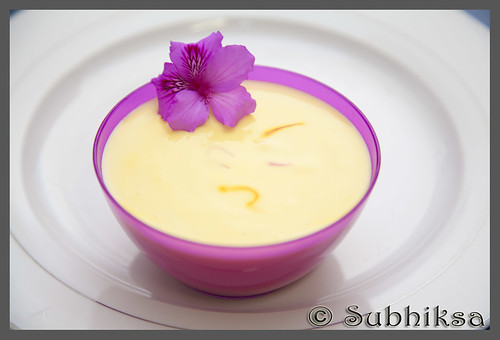
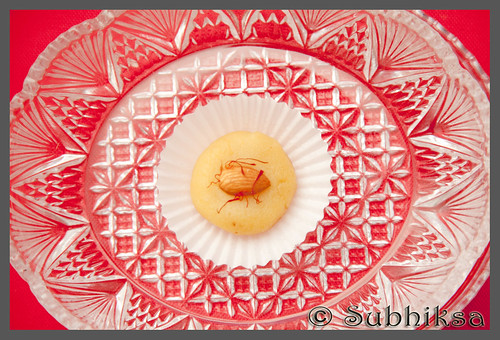
Kesar Shrikhand


Shrikhand - one of my favorite sweets, if some guests arrive at our house my mother use to make shrikhand puri. 
The process of making is very simple and I made this one more simpler. I used thick and creamy yogurt instead of water drained yogurt (Chakka)  which is more thicker. As I had some guest and I didn't had much time to make any sweet so I made this Shrikhand within no time. Use thick yogurt as when you add sugar it will become thin in consistency. 


Ingredients:

  • 1 cup yogurt, thick and creamy
  • 3/4 cup sugar
  • 10-12 saffron strings (Soaked in warm milk for few mins)

Procedure:

  1. Mix all the ingredients together to a smooth consistency. 
  2. Serve cold and with Chapati.

Thursday, November 11, 2010

Spanish Food


What is real Spanish food?

Sitting on the Iberian Peninsula and with the Mediterranean coast to the East, Spain has been blessed with a geographical position that results in some of the world's best produce. Sun ripened vegetables, a wealth of seafood from the coast and plenty of land for sheep and pigs to roam on, mean that every corner is blessed with fantastic ingredients. While there are a few central ingredients - chorizo sausages, rice, tomatoes, onions and garlic - each region interprets them in unique ways, so there are plenty of regional specialities.
Seafood is loved throughout the country and is treated with the utmost respect. Heading inland to the heart of the country, you'll come across classic jamon (cured ham) and a range of hearty stews.
Spain loves its traditional dishes, but it is also leading the way in new cooking methods and several of the country's restaurants are continually voted among the world's best. It is this combination of old and new, of looking to the past while embracing the future, that characterises Spanish food and makes it one of the world's most exciting cuisines.

Iconic dishes

Spanish cooking is known for a whole host of fantastic dishes. Here's some of the best:

Tapas

This range of dishes is not only a way of eating, but a central part of Spanish culture. Believed to have begun in a bar when a small plate of food was used to cover - or tapar - drinks to keep the flies out, it has been embraced by the entire country, with each region adding its own interpretations to the spread. Consisting of anything from a few slices of jamon or a wedge of tortilla española to a plate of sizzling garlic prawns or stuffed piquillo peppers, this is the way to eat when visiting Spain!

Paella

Hailing from Valencia, the paella is Spain's most famous dish. These large rice dishes are traditionally cooked outside for special occasions, and were once only cooked by men. While there are hundreds of paella recipes around, the two traditional ones are the valenciana and the marinera. The valenciana is made from rice, chicken, rabbit, tomatoes, capsicums, beans, olive oil, saffron, and occasionally artichokes and peas. The marinera, the most well known paella, contains rice, fish, shellfish, garlic, olive oil, tomatoes and saffron.

Tortilla española

Roughly translated as a Spanish omelette, this simple dish combines thinly sliced potatoes with eggs, to create a thick potato cake that is served throughout the country. Eaten both hot or cold, as part of a meal or as a tapa, the tortilla española is a central part of Spanish gastronomy. While it is usually kept to a simple mix of potatoes and eggs, you can sometimes find other vegetables or even crispy chorizo added to the mix.

Gazpacho

This cold tomato and bread soup has its origins in peasant fare, but is now a much-loved classic throughout the country. Traditionally made from a mix of tomatoes, garlic, capsicum and cucumber, it is occasionally garnished with hard-boiled egg or wafer thin slices of jamon.

Pollo al ajillo

This comforting dish sees chicken cooked in garlic -al ajillo - to create one of the country's most loved classics. Served with fried potatoes and a salad, it is a satisfying meal found throughout Spain.

Churros con chocolate

This pairing sees churros, the long fried Spanish doughnuts, served up with a mug of thick hot chocolate, for a sugar-loaded breakfast or for an evening snack. The only rules to this pairing are that the churros must be eaten pipping hot and that they should be dunked into the chocolate.

Flan

The Spanish version of crème caramel, this caramel-topped vanilla egg custard is a popular dessert. Made in ramekins or a baking dish and removed just before serving, this classic dessert is the perfect end to any meal.

Crema catalan

Similar to the French crème brulee except with the addition of cinnamon and citrus peel, this dessert is loved throughout the country. Unlike the French version, this Spanish custard requires no cooking, and is instead set in the fridge. Served in shallow terracotta dishes, it is adorned by a crispy burnt sugar topping, which makes a great textural difference to the spiced custard below.

Arroz con leche

This delicious creamed rice dessert is a classic item on any Spanish menu. Made from rice simmered in a mix of milk, sugar, citrus peel and cinnamon, it is enjoyed warm in winter and cold in summer. Before serving it is dusted with a little ground cinnamon to add a final spicy note.
For more information click Here

Tuesday, November 9, 2010

Lal Bhoplyachi Bhazi


Lal Bhoplyachi Bhazi ( Pumpkin vegetable)
This vegetable is specially done in Dasra festival at my in laws place. Its really very easy to make and delicious too. Its basically offering to god so we don't use onion, ginger, garlic.

Ingredients:
  • 2 cup cubed pumpkin (  seeded removed and peeled) 
  • 1 tbsp Panch Phoron
  • 1/2 tsp turmeric
  • 1/2 tsp chili powder
  • salt to taste
  • 3-4 curry leaves
  • Pinch of Asofotida
  • 1 tbsp oil
  • For garnishing, chopped coriander and grated dry or fresh coconut.

Procedure:
  1. Heat oil in a pan, add curry leaves and Panch Phoron , fry well till properly roasted.
  2. Add turmeric, hing, chili powder and cubed pumpkin. Add salt.
  3. Fry well and close lid and cook for 5-10 min.
  4. Its done, garnish with chopped coriander and grated coconut.
This post goes to USmasala

Sunday, November 7, 2010

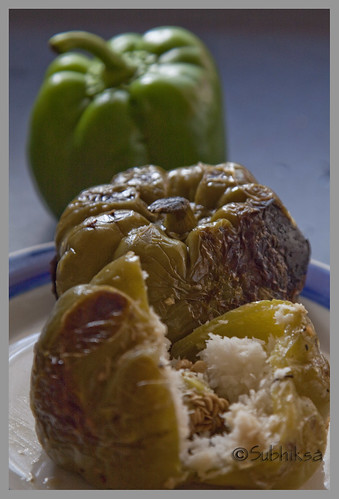
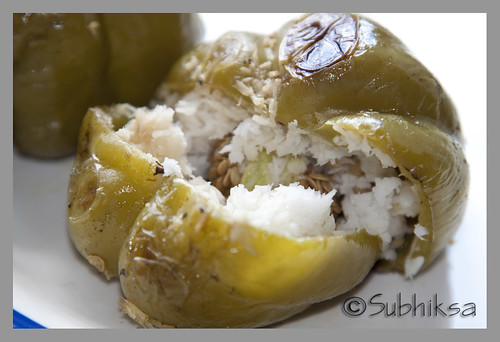
Bharli dhabu mirchi (stuffed Bell Pepper)

Stuffed Capsicum

This is a simple recipe my mother use to make, I love the taste of coconut in the capsicum. In my mother's house we had two pans / tawa, one for chapapti and other for making vegetable and Bhakri. For making chapati it was flat pan but making vegetables it is bit deep / kholgat we call it 'kala tawa' black pan as it is black in color, mostly it is made of iron. So the food tastes better when made in it. So the conclusion is we make this capsicum in this pan / tawa. :) 
Ingredients:
  • 5 green capsicum / bell pepper
  • 3 cup fresh grated coconut.
  • salt to taste
  • oil for shallow frying.
Procedure:
  1. Cut the capsicum into 2 parts ( not 2 separate parts, but just give a slit in them)
  2. Mix coconut and salt together.
  3. Fill the capsicum with the coconut and salt mixture.
  4. Shallow fry them in Pan or tawa or roast in oven.
  5. Let them fry well, turn them now and then to cook from all sides.
  6. Have it with Chapati, Enjoy
Stuffed Capsicum

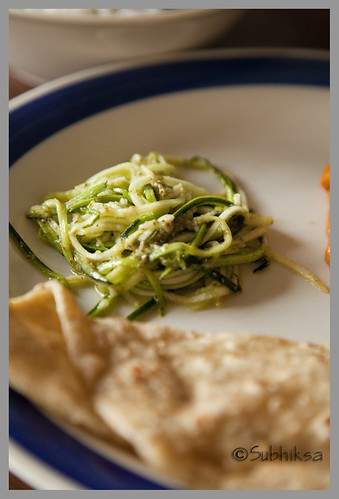
Zucchini salad


This is one of the simple salad, most of the time we have pesto at home or any sort of chutney's so use them with any raw vegetable to make a different sort of salad.


Ingredients:
  • 1 Zucchini grated / Julienne 
  • 1 tbsp Rocket Pesto / Basil pesto
  • salt if needed
  • 1 tsp Olive oil
Procedure:
  1. Mix together above ingredients.
  2. and Serve , garnish with coriander.

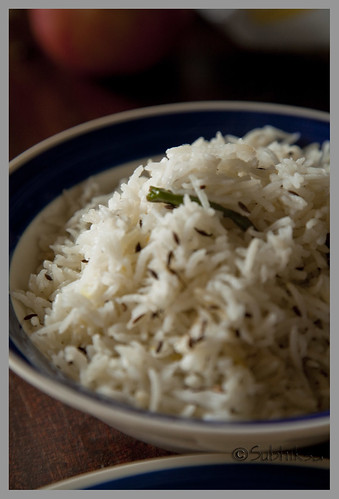
Jeera rice (Cumin Rice)


Ingredients:

  • 2 cups cooked Basmati rice
  • 1 tbsp cumin seeds
  • 2 green chilies slit
  • 1 tbsp ghee / oil
  • salt to taste.

Procedure:

  1. Heat ghee in a pan add cumin seeds, chili. Fry well till the cumin and chilies are slightly brown.
  2. Add the cooked rice and salt.
  3. Fry well.
  4. Serve with any curry. 
  5. NOTE: The cooked rice should not be too soft, generally use 1 cup and 2 cups water to cook basmati rice. Or it might differ from rice to rice but the end product should be - the grain of rice should be separate and should not stick each other like sticky rice. 


Clear corn soup

CLear corn soup

This is one of the easiest soup I ever made, You can reduce time span in making by using the frozen corn kernels. Do use the vegetable stock as in recipe, because if you make it only with corn and cornflour it doesn't taste as good as with the stock. You can add different boiled vegetable to it as well. Serve with soy sauce or Peri Peri sauce .

Ingredients:

  • 1 cup sweet corn, cooked (boil the corn cobs in water and salt for 5 min, remove the kernels)
  • 1 tbsp cornflour (I used unbleached cornflour)
  • salt to taste
  • 1 tsp vegetable stock powder
  • 2 cup water


Procedure:

  1. Heat water 2 cups of water in a pot, add vegetable stock cube / powder OR use vegetable stock instead of water.
  2. Add corn kernels to it, let it boil for 2 mins.
  3. Mix cornflour with 1 tsp water and pour the mixture to the simmering stock.
  4. Boil for further 2-3 mins.
  5. Serve hot with soy sauce or sprinkle some stock powder on it.


Besan Ladoo

Mulyachi Koshimbir (Radish Salad)


Ingredients:

  • 1 medium size radish, peeled and grated
  • 1/2 tsp mustard seeds
  • 1/2 tsp cumin seeds
  • 4-5 curry leaves
  • 2 green chili chopped 
  • pinch of asofoetida
  • 1 tsp oil
  • 1 tbsp peanuts, roasted and coarsely ground
  • 1 cup plain yogurt / sour yogurt / half and half - sour and plain yogurt
  • fresh coriander chopped for garnishing
  • salt to taste

Procedure:

  1. Make a tarka / phodni - heat oil in a small pan add mustard seeds and cumin seeds with chili and curry leaves fry for 30 sec and turn off the gas and add asafoetida . Mix well.
  2. Put the tarka on the grated radish mix well and add yogurt and coarsely ground peanut, salt.
  3. Garnish with fresh coriander leaves.

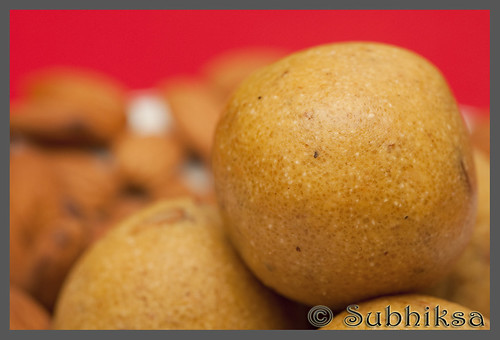
Besan ladoo


Ingredients:
  • 1-1/2 cups Besan (Sieve flour before using and also after roasting)
  • 1/4 cup Semolina (rawa) - for giving texture
  • 1/2 cup Powdered Sugar / caster sugar
  • 7-8 Cardamom, powdered
  • 1 tbsp poppy seeds, roasted
  • 2 tbsp raisins, fried in ghee
  • 1-1/2 cup ghee
  • 10-15 almonds chopped, roasted in ghee
Procedure:
  1. Roast semolina without ghee in a thick bottom pan on low-medium heat till slightly brown, when cooled grind it to a fine to coarse powder.
  2. Now in the same pan roast Besan without ghee on low-medium heat till slightly brown.
  3. When roasted properly add ghee and semolina and roast again for another 5-10 min with constant stirring and then turn off gas.
  4. Mean while roast almonds in ghee. Keep aside.
  5. Note: You know it is ready when your whole house is filled with sweet aroma of the roasting besan.
  6. Add sugar to it and mix well.
  7. Add cardamom powder and chopped almonds, mix well.
  8. Allow to set and cool for 5-7 min and make ladoos when it is still warm.
Note: Purpose for roasting the besan is to get rid of the rawness of  besan.
Don't over heat the pan to avoid constant stirring,  the mixture will become very dry.


Friday, November 5, 2010

Happy Diwali


WISH YOU ALL A VERY HAPPY DIWALI AND PROSPEROUS NEW YEAR

Thursday, November 4, 2010

Palak Chapati -Spinach Chapati


This is my sudden idea to make Palak Chapati. I just had a thought and made it.
I was good in taste, and bit different from regular chapati.

Ingredietns:
  • 1 cup whole wheat flour
  • 1/2 cup cooked palak / Spinach  (Clean the spinach and keep it in boiling water for 30 sec.) 
  • 3 green chilies
  • 1 tsp cumin
  • salt to taste.

Procedure:
  1. Grind together spinach , green chilies, and cumin to a fine paste.
  2. Add salt to the mixture and mix with the wheat flour, make the dough as for Chapati.
  3. Keep aside to set for 10-15 min.
  4. Make small parts of the dough and roll to make chapati.
  5. Fry on a pan.
  6. Don't apply much oil when frying on pan.
  7. Have with Phutana-dalichi-chatni. mixed with some oil in it. Or  any pickle, yogurt.

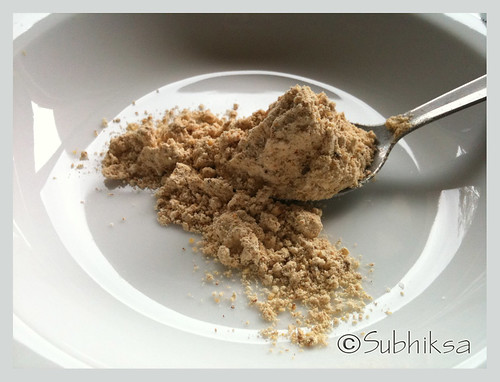
Phutana dalichi chatni


Ingredients:

  • 1 Cup roasted chana dal (Phutanyachi dal)
  • 2 tsp coriander seeds
  • 1 tsp fenugrek seeds
  • 1 tbsp cumin seeds
  • 4 dried red chili
  • 1 tbsp Split Chana dal
  • 1 tsp urad dal
  • Salt to taste

Procedure:

  1. Dry roast all the ingredients above separately on a low flame till very light brown color appears on them.
  2. Then grind all the ingredients together.
  3. Store in a airtight container.
  4. Can store upto months.
  5. Shown Beside is Phutanyachi dal


Badam Halwa


On the occasion of Dhanatrayodashi , I made Badam Halwa for Prasadam.

Ingredients:

  • 1 cup - Almonds / Badam -soaked overnight and peeled
  • 3/4 cup - Sugar (can take more if you like more sweet)
  • 2 tbsp - Ghee
  • 5-6 strands of saffron
  • 1/4 cup Milk

Preparation :

  1. Grind the peeled almonds to a coarse paste in a grinder with milk.
  2. Add the ground paste to a heated pan and bring them to a boil with a reduced flame
  3. Keep stirring and add sugar and saffron, Keep stirring till the halwa becomes thick, add the ghee to it and keep stirring again.
  4. Remove from flame when it is thick enough to make ladoos or pedas or you can have it as is.
  5. Note:While stirring the halwa will become thick and it will come along with the spatula you are stirring with without sticking to the bottom, that is the sign for the halwa being done.


This post goes to the Diwali sweets and snacks event 2010

Wednesday, November 3, 2010

दीपावली


दिवाळीची सुरवात , आज आहे धनत्रयोदशी, गोवत्सा द्वादशी आणि वसुबारस
'गोभिर्विप्रैश्च वेदैश्च सतीभि: सत्यवादिभि:।
अलुब्धै: दानशूरैश्च सप्तभिर्धार्यते मही:।।'


भारतीय संस्कृतीत देवांनी सर्व विश्व व्यापले आहे असे मानले जाते. परमात्मा हा सर्वच ठिकाणी असतो. जीवनाच्या विकसनशील परंपरेत हे फक्त मानवतेपर्यंत मर्यादीत न राहता 'सर्वभूतहिते' हा त्याचा मुख्य आदर्श आहे. प्राणीमात्रावर फक्त दया न करता प्रेम करणे हा त्यामागील मुख्य उद्देश आहे. आपण देवांवर दया करत नाही तर देवावर प्रेम करतो व त्यांची पूजा करतो. म्हणूनच प्राण्यांमध्ये जर देव वसत असतील तर त्यांच्यावरही दया न करता त्यांचे पूजन केले पाहिजे. त्यांवर प्रेम केले पाहिजे. म्हणूनच भारतीय संस्कृतीच्या दृष्टीने मानवाच्या अंत:करणात प्राणीमात्रांसाठी आदर असला पाहिजे. भारतीय संस्कृती मानवाला पूर्ण सृष्टीवर प्रेम करावयास शिकविते. पृथ्वीतलावर गायीचे महत्त्व खूप जास्त आहे. 

'गोभिर्विप्रैश्च वेदैश्च सतीभि: सत्यवादिभि:।
अलुब्धै: दानशूरैश्च सप्तभिर्धार्यते मही:।।' 

'गाय, ब्राह्मण, वेद, सती, सत्यवादी, निर्लोभी व दानशूर यांना पृथ्वीने धारण केले आहे. ऋषींनी गायीवर प्रेम करण्यास सांगितले, त्यावेळी कदाचित हिंदू हा शब्द प्रचलितही नसेल. म्हणून गाईला केवळ हिंदू धर्माचे प्रतीक मानणे चुकीचे ठरेल. मानवेतर सृष्टीवरही प्रेम करणे हेच गो-पूजेतून सांगितले जाते. मोहम्मद पैंगंबर यांनीही कुराणातून गाईच्या निर्दोषत्वाचे व प्रसन्नतेचे वर्णन करून गो-पूजा करावी असे सांगितले आहे. 

गाय मानवाला आपले सर्वस्व देते. गाईचे दूध पिऊनच मानव धष्टपुष्ट बनतो. गाय शेतात काम करून शेती पिकवते. त‍िच्या शेणाने उपयुक्त असे खत मिळते. गोमुत्र अनेक रोगांसाठी रामबाण औषध ठरते. जिने असे अनंत उपकार मानवावर केले आहेत तिच्या प्रती जर आपण कृतज्ञ राहिलो नाही तर हा मानवतेवर कलंक ठरेल. 

भारतीय संस्कृतीला गाईकडे फक्त तिच्या उपयुक्ततेच्या दृष्टिकोनातून पाहणे मान्य नाही. कारण जर गाईकडे फक्त उपयुक्तता या दृष्टीने पाहिल्यास ती निरूपयोगी झाल्यानंतर मानव तिला कसायाकडे पाठवावयासही कमी करणार नाही. ज्याप्रमाणे आईचे दूध पिऊन लहान मूल मोठे होते त्याचप्रमाणेच गाईचे दूध पिऊनच मानव मोठा होतो. म्हणूनच गाय ही मानवासाठी मातेसमानच आहे. आई उपयोगी असली किंवा नसली तरीही आपल्याला पूजनीयच असते. वाघ, सिंह आपल्या पोषणासाठी गाईला मारतात व मानव स्वत:च्या पोषणासाठी गाईला पाळतो व तिचे पूजन करतो. यातच मानवाचे वेगळेपण आहे. दुसर्‍या प्राण्यांच्या मादीच्या दुधावर मोठा होणार्‍या मानवाच्या बुध्दीचे हे वळण कौतुकास्पद आहे. जिचे दूध पिऊन आपण मोठे होतो त्या गाईलाही आई मानणे यातच मानवाचा मोठेपणा सामावलेला आहे. 

भारतीय संस्कृतीत गाईला स्वकिय मानले गाते. या संस्कृतीत वाढलेल्या मानवाला जेवणापूर्वी गोशाळेत बांधलेल्या गाईची आठवण येते. तिला चारा देऊनच तो जेवायला बसतो. मला जशी भूक व तहान लागते तशीच गाईलाही लागते, असा विचार करून मानव वात्सल्यपूर्ण भावनेने तिच्या पाठीवर हात फिरवून तिला पाणी पाजतो. गाईच्या डोळ्यातही आपण मानवाप्रती प्रेम पाहू शकतो. आपले पूर्वज गाईला प्रेमभावनेने पाळत असत. गाईचे मानवावरील हे अनंत उपकार ध्यानात घेऊनच आपण आधी गाईचे स्मरण मरतो व मग इतर प्राण्यांचे स्मरण करतो. 

गाईचे महत्त्व वाढविण्यात श्रीकृष्णांचाही फार मोठा हातभार लागलेला आहे. गाईचे महत्त्व जाणून ते जीवनात त्यांनी अंगिकारले. म्हणूनच ते फक्त कृष्ण न रहाता गोपाळकृष्ण बनले. त्यांनी गाईंवर इतके प्रेम केले की त्यांच्या बासरीतून निघणार्‍या संगीताच्या आवाजानेच त्या धावत येत. गोवर्धन पूजेचे महत्त्व पटवून देऊन त्यांनी गोकुळात अक्षरश: दुधा- तुपाच्या नद्या आणल्या. 

गाई परोपकारी तर असतातच परंतु, परोपकारासोबतच तिचे चर्वण करणे हाही एक गुण मानला गेला आहे. चारा चर्वण करून त्याचे दुधात रूपांतर करणार्‍या गाईला शुभ तर दुध पिऊन विष देणार्‍या गाईला अशुभ मानले जाते. 

आपणही आपल्या जवळ येणार्‍या व‍िचारांना लगेच न स्वीकारता त्यांचे चर्वण करून म्हणजे चिंतन मनन करून ते स्वीकारावेत. असे केल्याने समाजात होणारे अनर्थ टळतील. हे आपल्या समाजासाठीही शुभ व आनंददायी ठरेल. 

गाईला आपल्या पुर्वजांनी किती प्राधान्य दिले होते हे खालील श्लोकावरून स्पष्ट होते-- 
'गावो में अप्रत: सन्तु गावो में सन्तु पृष्ठत:।
गावों में हृदयें सन्तु गवां वसाम्यहम्।'

माझ्या पुढे गाय राहो, माझ्या मागे गाय राहो, माझ्या हृदयात गाय राहो व मी गायींच्या मध्ये राहू हा वरील श्लोकाचा अर्थ आहे. 

भारतीयांच्या दृष्टीने गाय विभूती मानतात. यामुळे आपली संस्कृती गोहत्येचा विरोध करते. आपले शास्त्र सांगते कि गाईमध्ये तेहतीस कोटी देवता वास करतात. 'सर्वोपनिषदो गावो' या दृष्टीने गाईला उपनिषद मानले जाते. यामुळे माझ्यासमोर उपनिषदाचे विचार राहोत, माझे जीवन उज्ज्वल करो, माझे जीवनमार्ग प्रकाशमय करो. माझ्यामागे उपनिषदाचेच विचार राहोत, माझ्या जीवन व्रताचे रक्षण करो, माझ्या हृदयात उपनिषदाचेच विचार राहोत. मी पूर्णपणे उपनिषदाचा विचार करो. अर्थातच माझे पूर्ण ज‍ीवन व त्यातील व्यवहार कुशलतेने होवो. 

श्रीकृष्णांनी उपनिषदातील विचारच गीतेत मांडले आहेत. 
'सर्वपनिषदो गावो दोर्‍धा गोपालनन्दन:।
पार्थो वत्स: सुधीर्भोवता दुग्ध गीताऽमृतम् महत्।।'
गीता माझ्या जीवनात दिशा देणारा ग्रंथ असावा. 

गो या शब्दाचे संस्कृतात अनेक अर्थ आहेत. 
'बिना गोरसं को रसो भोजनेषु? (दूध)
बिना गोरसं को रसो भूपतीष? (गाहू)
बिना गोरसं को रसो कामिनीषु? (दृष्टी)
बिना गोरसं को रसो हि द्विजेषु? (वाणी)
याचाच अर्थ गो-रसाशिवाय (दूध, दही, तूप) जेवणात काय अर्थ आहे? गो-रसविहीन (शक्तीहीन) राजाचे काय महत्त्व आहे? गो-रस (सुदृष्टी, चांगले डोळे) श‍िवाय स्त्रीच्या सौंदर्याला काय महत्त्व आहे? आणि गो-रसाशिवाय (वाणी) बोलण्यात काय अर्थ आहे. या सगळ्या अर्थांवरून गो-पूजा आपल्या जीवनात अशीच महत्त्वाची असते हे लक्षात ठेवावे.

Tuesday, November 2, 2010

Tomato Rice

Today I am starting a new label in my Blog for my friends, and for the recipes shared by them, thank you all my friends.
This recipe is shared with me by my friend, Shivangi.


Ingredients:
  • 2 cup basmati rice soaked for 1 hour and water removed
  • 1 cup onions chopped  lengthwise
  • 1 cup Tommatoes chopped  lengthwise
  • 1 tbsp ginger garlic paste
  • 1 tamal patri (bay leaf)
  • 1'' dalchini (cinnamon )
  • 2 lawang (cloves)
  • 1 cardamom
  • 2 tbsp cashewnuts
  • 2 tsp red-chilli powder
  • 1 tsp garam masala
  • 2 tbsp oil
  • 2 tbsp ghee
  • 4.5 cup boiling water
  • salt to taste

Procedure:
  1. Heat oil in a thick bottom pot.
  2. Add cloves,bayleaf,cinnamon,cardamom in oil and fry well .
  3. Add rice and stir for 2-3 mins.
  4. Now add boiled water and without lid bring rice to boil on low flame.
  5. Check now and then when rice is cooking, if all the water is absorbed and rice is cooked then cover with lid and turn off the gas. 
  6. NOTE: If all the water is absorbed and rice is not cooked then add little boiling water to it, and let it continue cooking.
  7. Now in another pan add oil then add onion,tomatoes,redchilli powder,garam masala,ginger-garlic paste,salt.
  8. Heat till oil separates the mixture around 2-3mins
  9. Now remove half rice from bottom pot and add this pan mixture (of onion and tomatoes) form layer now add fresh grated coconut around 1/2 cup on mixture.
  10. Cover it with remaining rice.
  11. Garnish rice with fried onion and cashewnut add 2 tbsp of ghee on top heat 2-3 mins.
  12. Serve hot

Kadboli


Ingredients

  • 1 cup Rice Flour
  • 1 cup Water
  • 1 tbsp Split Yellow Moong dal
  • 1 tsp Cumin Seeds
  • 1 tsp Sesame Seeds
  • 1 tsp Carom seeds
  • 1 tsp Chili powder
  • 1/2 tsp turmeric powder
  • 1 tbsp oil
  • Salt to taste
  • Oil for deep frying
Procedure:

  1. Boil moong dal in water for 5 min.(Don't let dal over cook)
  2. After 5 min  add some more water to it , to make overall all 1 cup of water.
  3. When water starts boiling add salt, turmeric powder, chili powder, cumin seeds, carom seeds and sesame seeds.
  4. Now add rice flour and mix well with the rolling pin or thick wooden spatula. Add oil. mix well.(photo no. 1)
  5. Close the lid and turn off the gas, let it rest for 10 min.
  6. Now till the dough is hot knead well using oil to you palms. (photo no. 2, 3, 4).
  7. Now make small parts and roll with your  hands to make small circular shapes as shown in above photo no.5, 6, 7
  8. Keep the small circle in a plate.
  9. Heat oil in a pan and add the kadbolis to it.
  10. Stir now and then to make sure it is fried on both sides. Fry till golden brown, else it won't cook from inside.
  11. Fry on low- medium heat.
  12. Note: When you put in the oil you can see lots of bubbles coming through, But when its nearly done the bubbles will stop. So you can know now that its done.
  13. Remove on kitchen paper towel, I used the wooden basket so that the air flows through it and cools fast.
  14. When done and cooled store in a air tight container.


This post of mine goes to Bookmarked recipes every Tuesday for US masala

This post also goes to Diwali sweets and snacks event 2010